

Southern Africa has an established history with grant making and philanthropy. As a result, there is an already established impact across categories and causes. However participatory grant making brings with it a unique element that really sees communities take the lead. This allows for more sustainable change made through connecting organisations, building platforms and a truly inclusive intersectional approach.
The Love Alliance grant making across Southern Africa has been something of a joint venture. Starting with HIV funder Aidsfonds, then The AIDS Rights Alliance for Southern Africa, ARASA. A regional partnership of civil society organisations promoting a human rights-based approach to HIV, as well as sexual and reproductive health rights.
Participatory grant making in the region comprised a committee of partners who serve as thought leaders and decision makers on behalf of their communities.
With over twenty-four active grants in the region, the grant makers serve in an administrative and technical capacity. This specificity of roles and community led intervention has seen organisations grow in power and making change visible.
Zimbabwe Civil Liberties and Drug Network, Zimbabwe
In Zimbabwe, the Participatory Grant making process is putting community leaders at the forefront. Through its peer educator systems, they are back to being authors in the decision making concerning their communities. Peer educators also known as ‘Besties’, enable deeper connection with communities, giving them a voice, and simultaneously empowering them to hold policy makers to account.
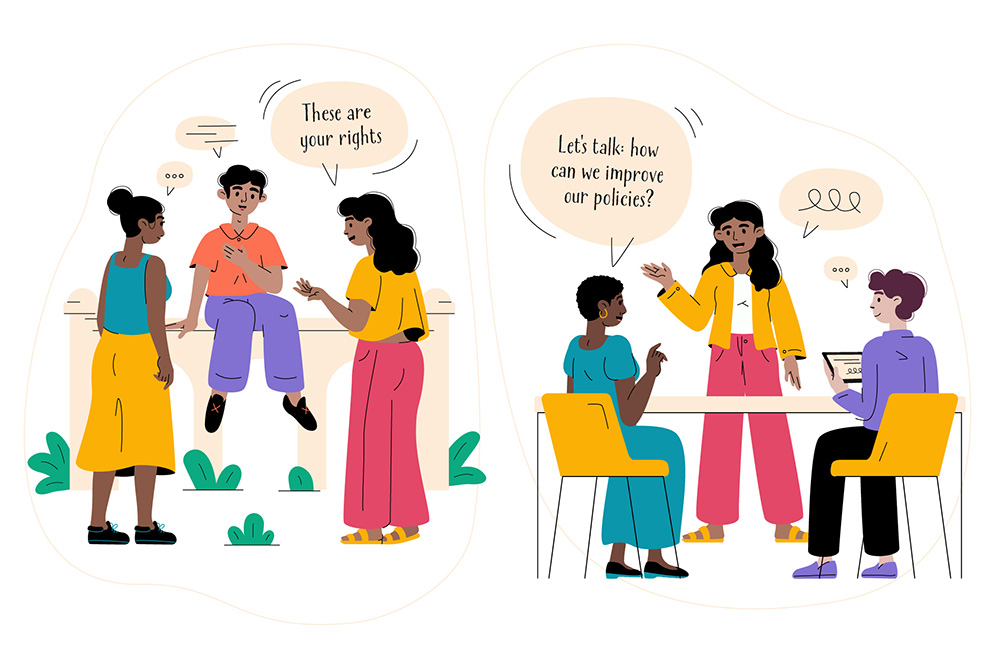
Left: Besties educate communities on where to get harm reduction services and what their rights are. Right: Representing the people who use drugs community, besties engage with policy makers.
Wilson Box is the executive director of the Zimbabwe Civil Liberties and Drug Network. An organisation that has been part of national advocacy for people who use drugs. Through its Right Path Project funded by Love Alliance, it looked at services available for people who inject drugs in the country. The fund allowed for deeper investigation into policy reform and decriminalisation of people who use drugs. By organising round tables bringing together community leaders and governments, the project has been able to influence policy on national levels and even global funding processes. By putting communities at the centre Zimbabwe has received $850,000.00 from the Global Fund.
“Results show that work was being done” Wilson says. Women and youth have not been left out of the conversation thanks to a system that priorities community needs.
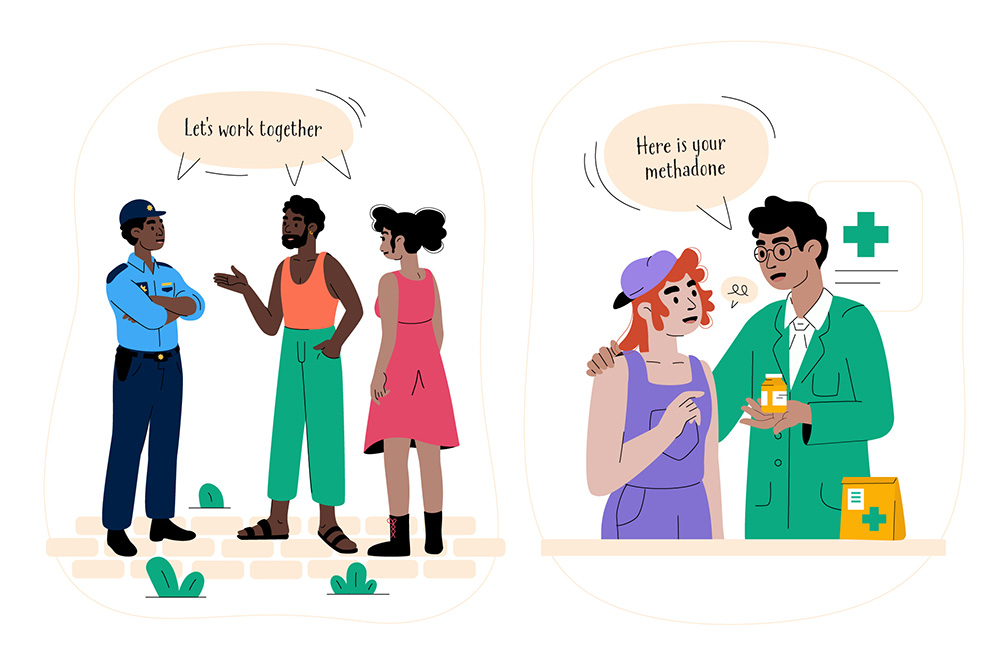
Left: Police and people who use drugs come together more to reduce stigma and discrimination.
Right: Since the start of the project, harm reduction services became more available.
Triangle Project, South Africa
For over 35 years organisations like the Triangle Project in South Africa have been leading programmes at the intersection of human rights, LGBTIQ+ rights and health care. Always fuelled by its community’s needs and changes in climate, their programmes have created interventions that span helplines, social worker trainings, school engagements and hate crime monitoring.
But this time around, what has made the Love Alliance programme different? For health and services manager Sharon Cox, she believes it has felt like a partnership and collaboration as opposed to a hierarchy. Implementation plans are created with the needs and contexts of the communities involved. This process ensures partners work together to create synergy,
share insights, knowledge and learning from each other.
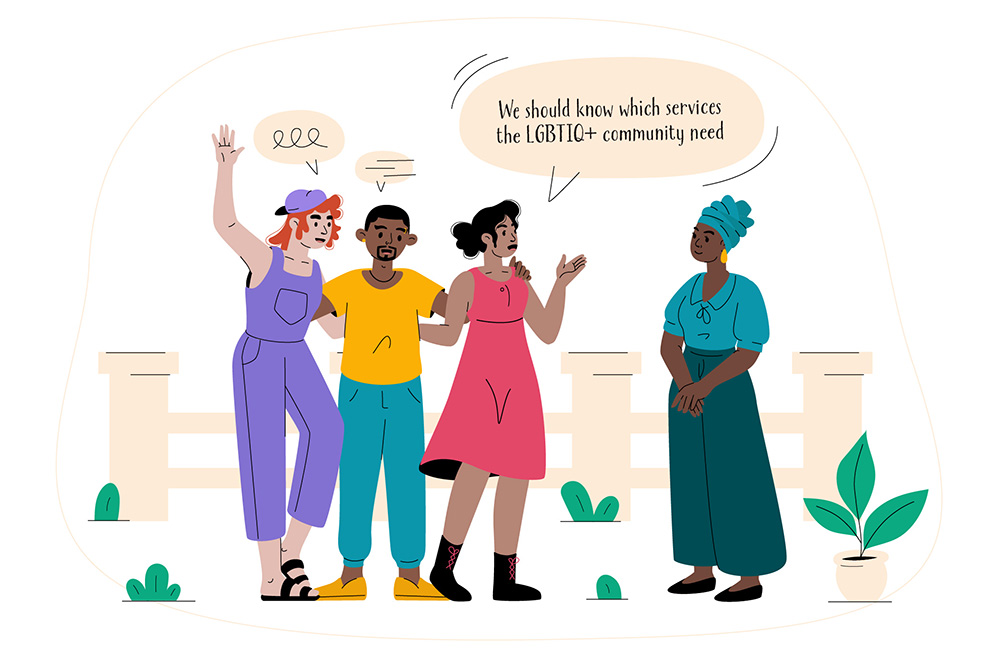
Melokuhle Dlamini, a resident of Soweto, addresses Lethabo Nkosi from the Triangle Project. “For too long, queer people haven’t received the health care services we need. Our clinics should be accessible for everyone”.
Cox says, “this is how we can implement what is needed as opposed to ticking boxes, wasting resources or doing what is not needed”.
This has become a light at the end of a very long tunnel in the work of development and community organising. A departure from the constant duplication of services that neither achieves what it is set out to do nor meet expectations.
The structure of the model has also seen direct impact on the ground. As funding isn’t funnelled through primary and sub recipients before reaching the organisation. This time around, there is enough to really tackle issues head on. Through its recent project, Triangle project secured a relationship with law enforcement. Sensitising them beyond the work they do and turning them to advocates within their own communities. The result is a shift from persecution into protection. The training has also been duplicated in Mozambique which means that both resources and best practices are expanded. Nothing goes to waste.
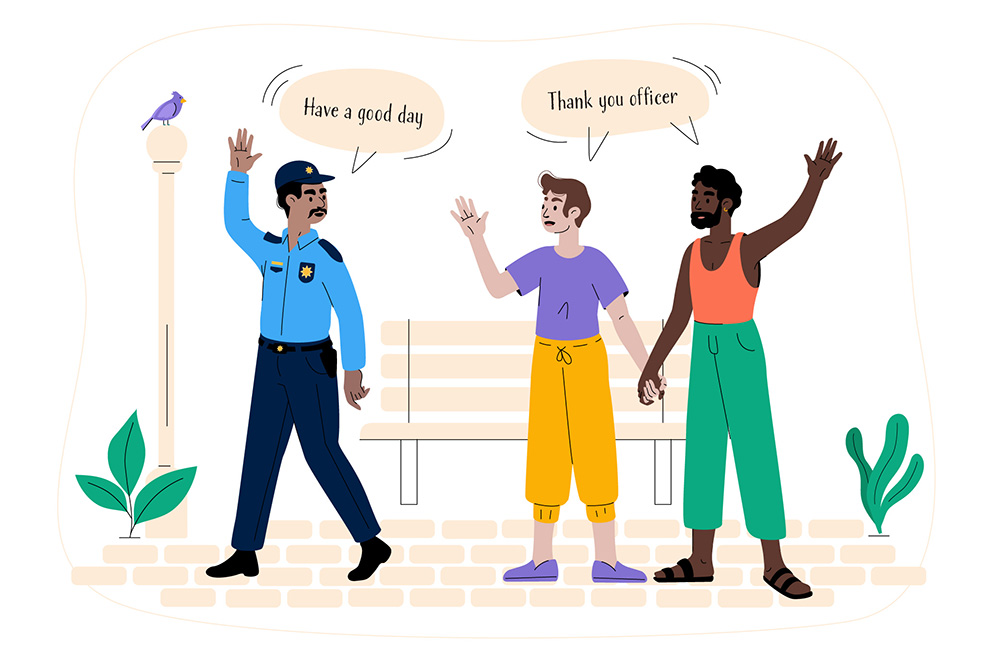
In South Africa and Mozambique collaboration between police, sex workers, people who use drugs, and the LGBTIQ+ community has led to improved relations.
Rede Nacional de Reduçāo de Danos UNIDOS, Mozambique
For harm reduction organisations like UNIDOS in Mozambique, the Love Alliance grants enabled the implementation of two projects over two cycles.
The first of the grants supported UNIDOS in establishing itself as a robust Key Population organisation and bringing together various key stakeholders to consolidate and expand harm reduction activities. By reflecting and strategizing on interventions, it began the possibilities to envision better prospects for the country.
Through its monthly meetings it strengthened advocacy on sexual and reproductive health issues, initiated extensive discussion around harm reduction policies, review on drug trafficking laws and consumption in Mozambique.
Adérito Tenhane who serves as the Executive Director says, “The Love Alliance funds helped UNIDOS gain visibility on digital platforms. With the communications officer, we were able to develop newsletters and workshops with media professionals in Mozambique that enabled us to feature our interventions in newspapers nationwide. We are now invited to present and discuss topics related to harm reduction and the human rights of people who use drugs.”
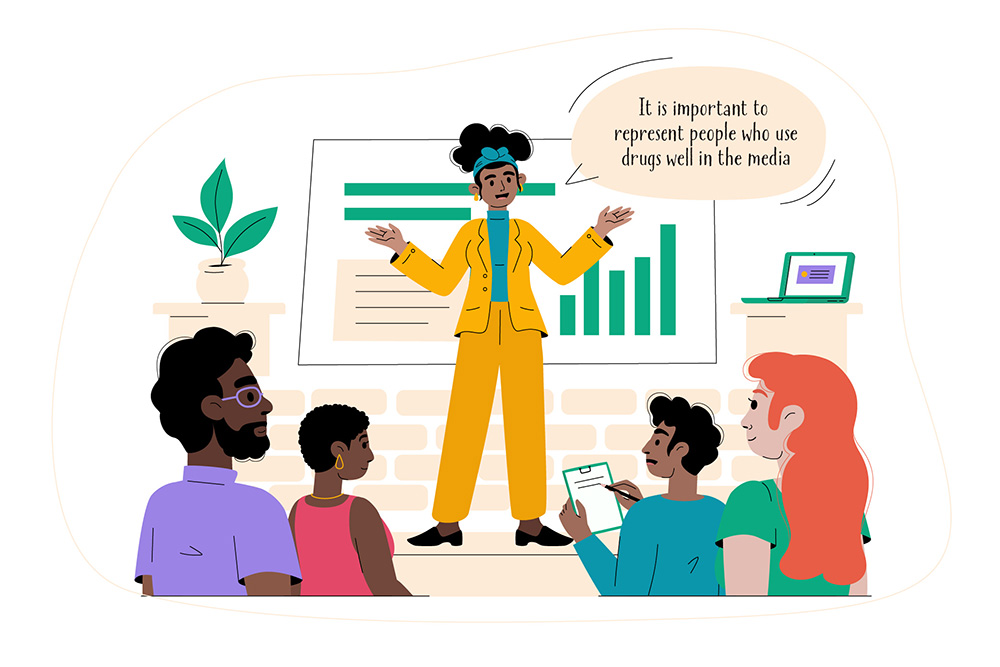
Manuel Condula – coordinator at UNIDOS – facilitates a workshop with journalists from various Mozambican media outlets.
The workshop in harm reduction was attended by journalists from print, radio, television, and digital media.
The grant also established a movement to support women who use drugs. A movement that arose from the need to address the widespread discrimination women who use drugs face across Mozambique. Women are denied access to various services, particularly health services, sexual and reproductive health and family planning. With the help of the Love Alliance grant it established the women’s movement of people who use drugs (MozWUD). The impact of its activities has seen immeasurable improvement of access to care.
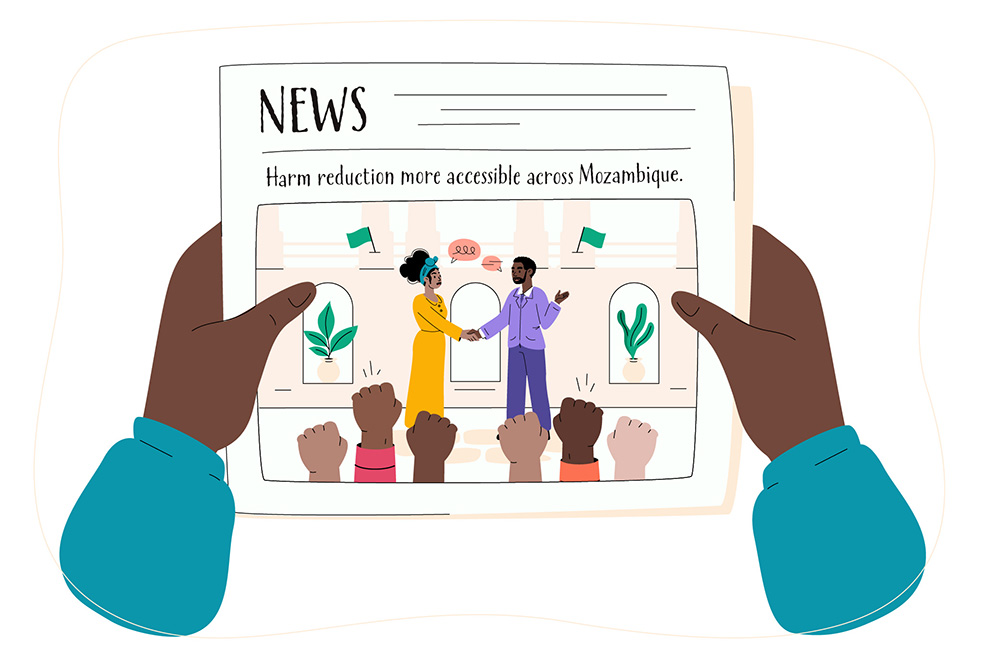
UNIDOS now sits across government forums advocating for the rights of their communities. They have been invited to parliament and extend their advocacy to policy reform.
UNIDOS now sits across government forums advocating for the rights of their communities, they have been invited to parliament and extend their advocacy to policy reform. The also have a space on the Global Fund’s country co-ordination mechanism. The organisation is headquartered in Maputo city and extends it operations to Nampula and Pemba.