HomeNews & storiesChanging paediatric HIV services – Eight years of experience from Uganda
HomeNews & storiesChanging paediatric HIV services – Eight years of experience from Uganda
Changing paediatric HIV services – Eight years of experience from Uganda
Last updated on: 05 March 2024
It takes a village, the community to raise children. The Towards an AIDS Free Generation in Uganda programme was Aidsfonds’ first paediatric HIV community intervention programme co-created with Ugandan community-based partner organisations. Eight years later, we can proudly say that together we have changed the way community-based HIV services are delivered.
Find, test, treat and retain
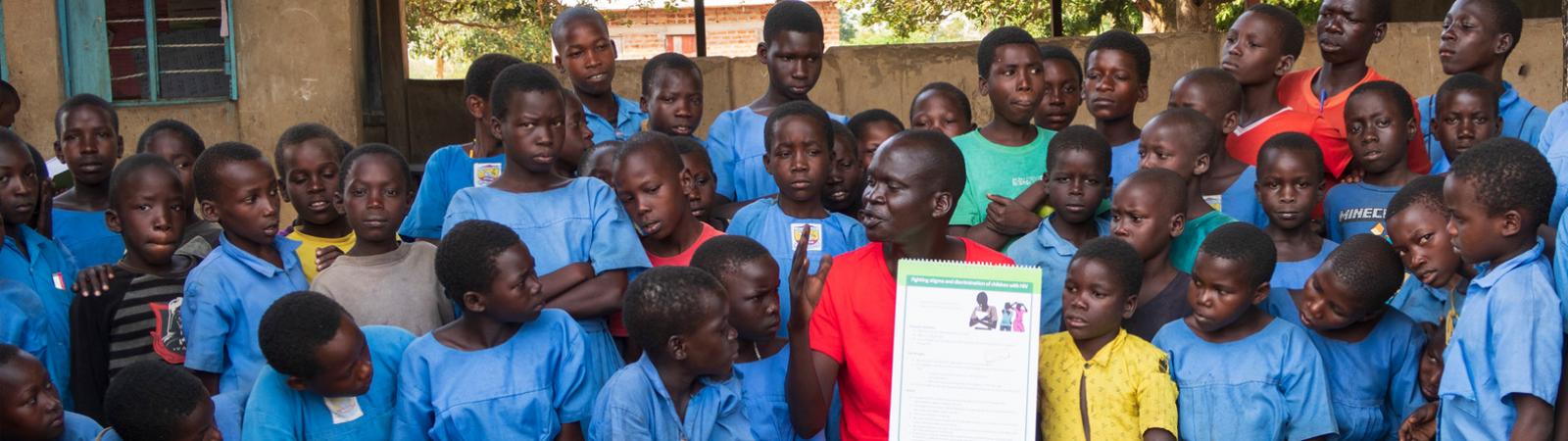
At the start of the Towards an AIDS Free Generation in Uganda (TAFU) programme in 2015, the number of children in care was low. 35% nationally were not accessing care and an estimated 98,000 children under the age of 15 were living with HIV. TAFU aimed to address this by training and equipping community health workers to integrate paediatric HIV support into their existing activities, to find, test, and treat children and pregnant women living with HIV and to ensure they stay in care.
>2500 children with HIV live healthy lives
This has been very successful; over the eight years of TAFU 8,373 children (0-14 years) were tested for HIV, of which 2,567 children tested positive and were enrolled in care. The 1,100 Village Health Teams conducted almost 24,000 household visits and ensured 3,285 pregnant women found their way to HIV testing and treatment services. Caregivers have an increased treatment literacy, reduced fear of HIV and feel more confident to support children living with HIV to live healthy, productive lives. At the same time, through savings and support groups, households have increased capacity to provide for household needs including adequate nutrition and transport to clinics to refill HIV medication regularly.
All our HIV exposed babies are HIV negative. This is because the community health workers support mothers to attend antenatal care, adhere to ARVs and give birth at the health facility
– Healthcare worker, Soroti District
Community health workers continue after project closure
In order to support community health workers with their work partners adopted a Volunteer Development Assistance model, in which community health workers join savings groups and develop income-generating activities to strengthen their household economic status. This turned out to be key in creating a sustainable approach; almost all of them continued after the end of the project.
Kids to Care scaled up to 4 more countries
Based on the successes and learnings of TAFU in Uganda, Aidsfonds scaled paediatric HIV programming to four other countries between 2018-2021: Zimbabwe, South Africa, Mozambique and Nigeria. These five programmes, co-developed with partner organisations form the basis for the Aidsfonds Kids to Care model for community based paediatric HIV programming.
Tangible impact: stories from Uganda
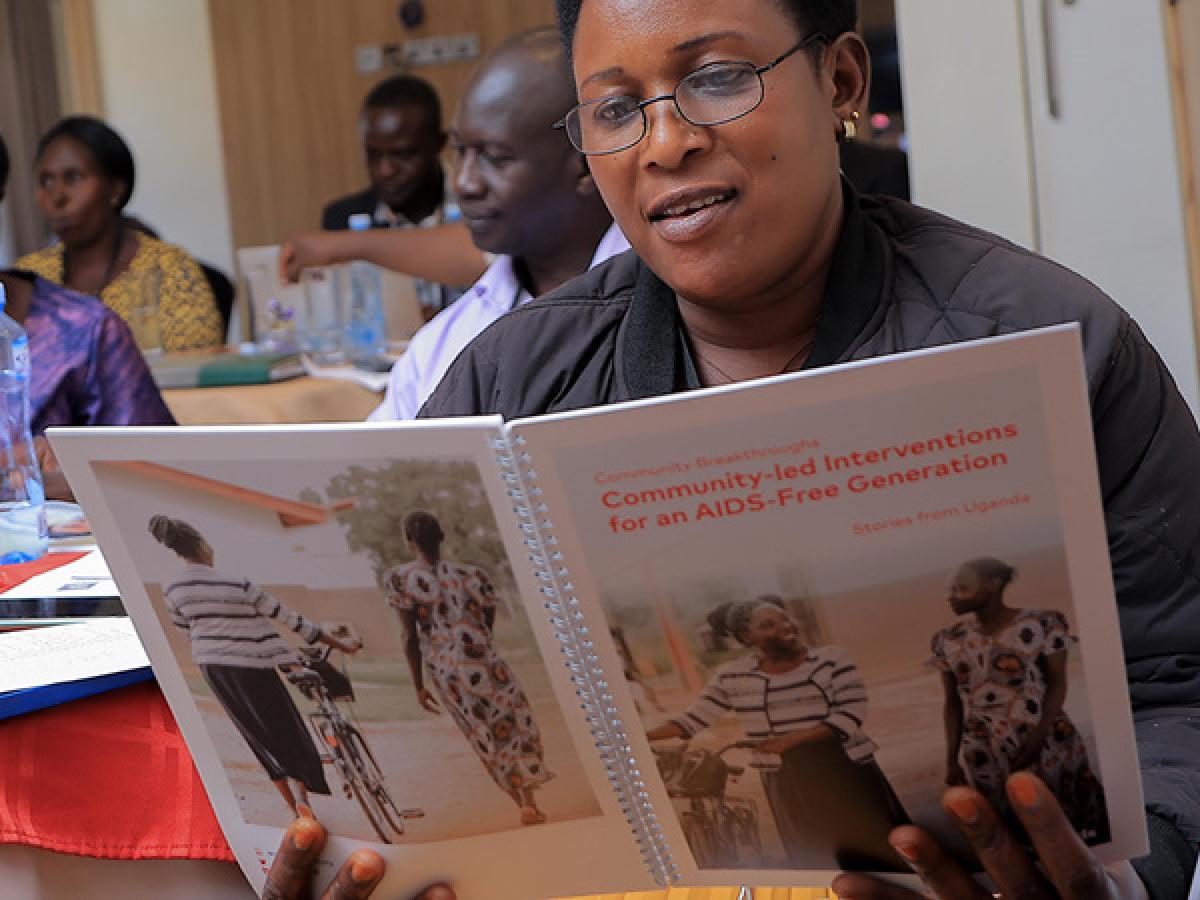
This storybook contains an inspiring collection of faces and voices from communities in Soroti and Mubende districts in Uganda working to break the barriers to reach all children living with or exposed by HIV. These community voices include health workers, community health volunteers, peer support group members, mentor mothers, members of social-economic empowerment groups, and more. The achievements they share are to a great extent the result of using the Kids to Care community intervention model.
Empowered communities are a resource that can make a great impact in the health and lives of children living with HIV
The Kids to Care Toolkit
Are you working in paediatric HIV programming? The Kids to Care Toolkit might be of great support to you. This toolkit has been developed to provide support for those who want to implement a community-based model to strengthen paediatric HIV care that is based on evidence and best practice.
The Towards an AIDS Free Generation in Uganda (TAFU) programme was Aidsfonds’ first paediatric HIV community intervention programme. The programme trained up community health workers to identify HIV positive children, and link individuals to care and ongoing support. The programme was co-created through community leadership and engagement with key stakeholders, building on community knowledge of the needs of children living with HIV. Towards an AIDS Free Generation in Uganda changed the way that community-based paediatric HIV services were delivered.
The EU Steps Up for Global Health in Uncertain Times
The EU Steps Up for Global Health in Uncertain Times
Today, the European Commission announced its intention to pledge a total of €700 million overall for the 8th Global Fund’s replenishment, subject to the outcome of the upcoming Multiannual Financial Framework negotiations.
At a time when budgets are under strain, priorities are competing, and the world feels increasingly unstable, stepping up for people affected by HIV, TB and malaria around the world is very welcome and a clear sign of the EU’s ambition to lead on global health. This commitment will help save millions of lives and keep everyone safer, including in Europe. It will support Africa’s ability to lead on its own health priorities, and build resilience in places under severe stress. This includes countries affected by war, such as Ukraine, where the continuity of HIV and TB services is critical not only for emergency response, but also for long-term recovery. With many donors cutting back on aid, the Commission’s renewed support for the Global Fund sends a much-needed signal of leadership and solidarity.
Sidaction and Aidsfonds are pleased to jointly launch a call for scientific proposals for the year 2026, aimed at accelerating advances in HIV cure research.
The aim of this call for proposals is to fund research projects exploring mechanisms or strategies that will contribute to achieving a cure or remission for HIV. Projects may investigate mechanisms to target the viral reservoir or enhance immune-driven control, the development of new therapeutic concepts, as well as research in the social sciences related to HIV cure or remission.
Through this call, we aim to support research that will ultimately lead to major biomedical breakthroughs, foster social acceptance of cure interventions, and promote an HIV cure accessible to the largest possible number of people living with HIV worldwide.