Indonesia Healthy Cities with Pride

Indonesia Healthy Cities with PRIDE (IHCP) aims to strengthen capacity for movements of young LGBTQI+ people across Indonesia to promote increased access to HIV services, reduction of stigma, discrimination, criminalisation and violence against young LGBTQI+ people, including young people living with HIV.

As part of Aidsfonds’ efforts to shift decision making to our communities, the project centres two youth-led organisations: the Youth Interfaith Forum on Sexuality (YIFoS) and the Indonesian young key populations network Inti Muda. In their role as co-leads and grant makers for the project, they are further leading a consortium of seven young LGBTQI+ and youth led organisations working on youth, SRHR, and LGBTQI-led health services in four intervention cities/areas.

The program is built on the theory of change: if the capacity of LGTBQI+ youth organisations is strengthened, discriminatory policies can be eliminated; if the quality of HIV services is improved, the health of young LGBTQI+ individuals will be better, contributing to the overall health in the areas where young people reside.

Time frame

2023 – 2025

Communities

LGBTIQ+ people, People living with HIV, Young people

Budget

€778,000

Countries

Indonesia

28 %

of people living with HIV in Indonesia have access to life-saving treatment

55 %

increase of AIDS-related deaths since 2010 in Indonesia


Background

In Indonesia, the number of AIDS-related deaths has grown by a staggering 55% since 2010. This is because only 26% of people living with HIV in Indonesia have access to life-saving treatment. HIV prevalence is very high among men who have sex with men (25.8%) and trans people (24.8%) and is rising rapidly especially among young LGBTIQ+ people.

The lack of rights and meaningful involvement in service provision of young LGBTQI+ people, including young people living with HIV, hinders access to HIV prevention, testing, treatment, care and support services. Available services are not tailored to their needs, sex education is not present or limited to biology, sexual healthcare is forbidden for people below the ages of 21 years.

Furthermore, the rights of Indonesian young people with diverse sexual orientations and gender identities and expressions are constantly under attack. The new penal code, which passed in 2022, has now outlawed sex outside of marriage, de-facto criminalizing same-sex sexual activity which are further defined as immoral behaviors and social ills.

Stigma, violence and discrimination against LGBTQI+ people are rife in Indonesia. Dominant political and social discourses dehumanize LGBTQI+ people and exclude them from social life and health and HIV services.

Objectives
  • Access to HIV prevention, testing, treatment and adherence services for young LGBTQI+ people, including young people living with HIV, by building on existing community-led services and creating new innovative partnerships
  • Reduced inequalities, including stigma, discrimination, violence and criminalization, that hinder an effective HIV response
  • Access to resources for communities to strengthen capacity, increase access to finance, build or join coalitions and contribute to the overall HIV response system strengthening, with a focus on young people living with HIV and LGBTQI+ inclusion.
Two gray armchairs with plaid cushions are arranged around a small round table with a vase. Abstract paintings hang on the wall, and geometric curtains cover the window—creating a calm space to discuss issues like HIV stigma in Indonesia.
Story

Against the Desert Storm: Building Queer Safety in the Midst of Oppression in Bandung

Against the Desert Storm: Building Queer Safety in the Midst of Oppression in Bandung

West Java, as one of the most populous provinces in Indonesia, is in the spotlight not only for its complex social dynamics, but also for the emergence of local regulations that directly or implicitly discriminate against LGBT people. In the last five years, there have been at least six legal products in various districts and cities in West Java that define non-normative sexual orientation and gender identity as a social threat that must be controlled, monitored, and even “rehabilitated”. Various cities and districts in West Java - such as Bogor, Cianjur, Karawang, Garut, Bandung, and Bandung Regency - have issued local regulations that directly or implicitly discriminate against LGBT people. The pattern of discrimination that emerges is evident in the way these regulations define non-normative sexual orientation and gender identity as “deviation”, “sin”, or “sexual disorientation” that is deemed to require corrective intervention. Some regulations mandate communities and authorities to participate in the monitoring and intervention of LGBT individuals, including through the establishment of task forces and coaching programs. This approach not only contradicts international mental health standards that recognize that sexual orientation is not a disorder, but also reinforces stigma, opens room for abuse of power, and criminalizes the existence of queer youth in everyday life.

Read more about Against the Desert Storm: Building Queer Safety in the Midst of Oppression in Bandung

A collage featuring handwritten text
Story

Love Without Exception: The Role of Faith in Ending HIV Stigma

Love Without Exception: The Role of Faith in Ending HIV Stigma

In Indonesia Healthy Cities with Pride, YIFoS Indonesia held a series of ongoing initiatives through Faith in Action, aimed at fostering inclusive environments for diverse SOGIESC and young people living with HIV (PLHIV). In April 2025, as part of this initiative, a training was held with 6 religious leaders and representatives from various faith communities: Islam, Christianity, Catholic, Confucianism, Hinduism, Buddhism, and one indigenous beliefs, along with representatives from SOGIESC groups and YPLHIV.

Read more about Love Without Exception: The Role of Faith in Ending HIV Stigma
Person holding a green paper with the word
Story

Health and Pride in Medan

Health and Pride in Medan

Medan faces significant challenges related to stigma and discrimination against PLHIV and the LGBTQI+ community. Access to healthcare services is limited, as many people are hesitant to seek medical help due to fears of rejection and discrimination. HIV issues and LGBTQI+ rights receive little policy attention, with healthcare services lacking inclusivity and minimal public education, worsening the situation for the LGBTQI+ community in addressing HIV in Medan.

Read more about Health and Pride in Medan
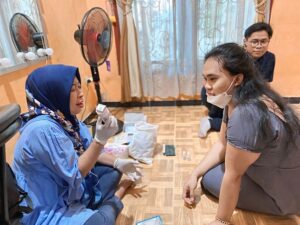
Three people in a room. One person sitting on the floor holding a medical item, another sitting nearby with a mask pulled down, and a third observing. Medical supplies are scattered around.
Story

Bridging Gaps in Healthcare: Enhancing HIV Services for Trans Women in Samarinda

Bridging Gaps in Healthcare: Enhancing HIV Services for Trans Women in Samarinda

The strong partnership between Inti Muda East Kalimantan and the Samarinda City Health Office, powered by impactful advocacy, has led to remarkable achievements. On April 4, 2024, Inti Muda East Kalimantan was invited by the Samarinda Health Office as a community representative to help the government select 10 new locations for PrEP services. By the end of May 2024, these new sites were operational, raising the total number of PrEP services in Samarinda to 12. This success is a testament to Inti Muda East Kalimantan’s effective contributions in establishing youth-friendly services for the LGBTIQ+ community, with a special focus on young transgender women.

Read more about Bridging Gaps in Healthcare: Enhancing HIV Services for Trans Women in Samarinda
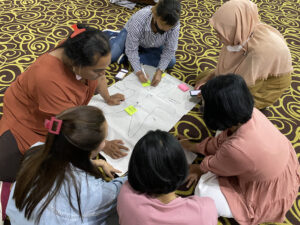
A group of five people are sitting on the floor, collaborating and drawing on a large sheet of paper spread in the center. They are surrounded by a carpet with a circular pattern.
Story

Breaking Barriers, Building Bridges: Empowering Diversity and Youth Participation in Indonesia

Breaking Barriers, Building Bridges: Empowering Diversity and Youth Participation in Indonesia

The impact of barriers experienced by young people with diverse gender and sexuality backgrounds in Indonesia emerges in the context of issues of human rights fulfillment and meaningful engagement in health and legal services. Discriminatory regulations and inhospitable services for young people of diverse genders and sexualities place them in a more vulnerable position to higher HIV infection rates, and criminalisation.

Read more about Breaking Barriers, Building Bridges: Empowering Diversity and Youth Participation in Indonesia

Partner with us!

Aidsfonds is interested in working together to further strengthen community leadership, increase HIV prevention choices, and improve treatment outcomes and quality of life of people living with or exposed to HIV. We want to talk to anyone who shares our dream and wants to join us on a journey toward a world free of AIDS.

Get in touch!

Get involved
A young woman joyfully raises her arms in the air, expressing happiness and celebration.